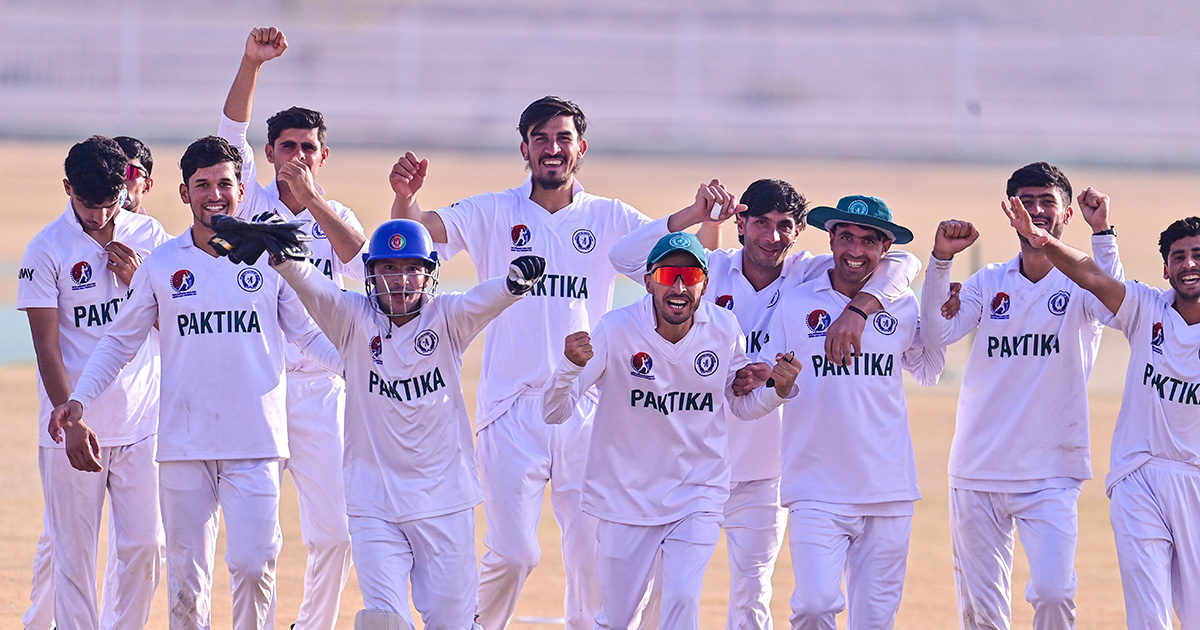
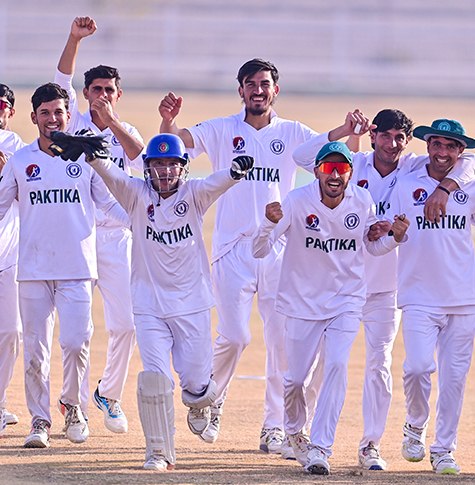
In accordance with the domestic cricket calendar of the Afghanistan Cricket Board (ACB), the 17th edition of the Wazir Mohammad Akbar Khan Provincial Grade II Tournament was successfully held across four provinces of the country. This year’s competition featured the participation of 40 provincial teams, which were divided into eight groups. Each group competed internally, and the top team from each group qualified for the Wazir Mohammad Akbar Khan Grade I Provincial Tournament.
The Grade II matches
were hosted at two venues each in Kandahar and Khost, and one venue each in
Kunar and Nangarhar. It is worth noting that the tournament was conducted
across seven cricket grounds in four provinces. Initially, the Najibullah
Tarakai Cricket Ground in Nangarhar hosted matches for two days, after which
all remaining matches in Nangarhar were played at the Ghazi Amanullah Khan
Cricket Ground.
The main
objective of the Wazir Mohammad Akbar Khan Grade II Provincial Tournament is to
identify top-performing teams and talented players for promotion to the Grade I.
As in previous editions, this year’s tournament also witnessed the emergence of
several promising young talents who showcased impressive skills in both batting
and bowling. These players are expected to further demonstrate their abilities
in the upcoming Grade I Provincial Tournament.
Group-wise Performance Overview
Group A:
Teams
participating were Nangarhar, Balkh, Kabul B, Samangan, and Zabul. Nangarhar
topped the group unbeaten with four consecutive victories and qualified for the
Grade I. Balkh finished second with three wins, Kabul B third with two wins,
Samangan fourth with one win, and Zabul ended fifth without a victory.
Group B:
Nangarhar B,
Badakhshan, Kunar, Jowzjan, and Kabul C competed in this group. Nangarhar B,
Badakhshan, and Kunar each secured three wins, but Nangarhar B advanced to the Grade
I based on a higher net run rate. Jowzjan finished fourth with one win, while
Kabul C placed fifth without a win.
Group C:
Kabul A topped
the group with four wins to qualify for the Grade I. Maidan Wardak finished
second with three wins, Farah third with two wins, Kandahar fourth with one
win, and Uruzgan ended fifth without a win.
Group D:
Khost emerged
as group leader with two wins and one loss, qualifying for the Grade I. Kabul,
Takhar, and Kunduz each recorded two wins and were ranked second, third, and
fourth respectively based on net run rate. Kapisa finished fifth with one win.
Group E:
Teams included
Logar, Khost A, Baghlan, Faryab, and Parwan. Logar topped the group unbeaten
and secured qualification. Khost A finished second with three wins, Baghlan
third with two wins, Faryab fourth with one win, and Parwan fifth without a
win.
Group F:
Paktika
delivered outstanding performances, remaining unbeaten to claim first place and
qualification. Nangarhar A finished second with three wins, Kunduz third with
two wins, Sar-e-Pul fourth with one win, and Nooristan fifth without a win.
Group G:
Kandahar A
qualified after securing three wins. Kabul D, Ghazni, and Helmand each recorded
two wins and were ranked second, third, and fourth based on net run rate, while
Paktia finished fifth with one win.
Group H:
Khost B topped the group with three wins and the best net run rate to qualify for the Grade I. Herat and Laghman followed in second and third with three wins each, Kabul E finished fourth with one win, and Nimroz ended fifth without a win.
Top Individual Performers
This year’s tournament saw numerous young players excel in both batting and bowling. Below are the top ten performers in each department:
Top 10 Run-Scorers:
- Farid Zadran (Badakhshan) – 335 runs in 4 matches
- Asghar Atal (Khost B) – 328 runs in 4 matches
- Naseebullah Popal (Kandahar) – 324 runs in 4
matches
- Naseer Ahmad Hashimi (Maidan Wardak) – 306 runs
in 4 matches
- Sohail Ahmad Momand (Takhar) – 286 runs in 3
matches
- Saifullah Ahmadzai (Parwan) – 246 runs in 4
matches
- Sami Mamoozi (Kabul A) – 240 runs in 2 matches
- Tahir Sarwari (Khost) – 239 runs in 3 matches
- Imran Hassan (Laghman) – 237 runs in 3 matches
- Abid Mohammadi (Nangarhar B) – 236 runs in 3
matches
Top 10 Wicket-Takers:
- Mohammad Ali (Herat) – 13 wickets in 4 matches
- Sayed Khan (Kabul C) – 13 wickets in 4 matches
- Asadullah Matani (Balkh) – 11 wickets in 4
matches
- Javid Siddiqi (Jowzjan) – 11 wickets in 4 matches
- Sharifullah Riaz (Kunduz A) – 11 wickets in 4
matches
- Ibrahim (Nangarhar) – 10 wickets in 3 matches
- Hayat Noori (Nangarhar A) – 10 wickets in 4
matches
- Mohammad Alam (Paktika) – 10 wickets in 4 matches
- Sami Mubarez (Paktia) – 10 wickets in 4 matches
- Imran (Kunduz) – 10 wickets in 3 matches
Pathway to
High Tier Tournaments
All standout players from the Grade II, particularly those excelling in batting, bowling, and fielding, will earn the opportunity to compete in the Grade I Provincial Tournament. This year, Besides Grade I that will be played in 50-over format, an addition provincial tournament is added in T20 format. Top performers from the T20 competition will advance to the National T20 Tournament, while standout players from the 50-over format will qualify for the Ghazi Amanullah Khan List A and Mirwais Nika Three-Day tournaments. The best performers from the three-day format will further progress to the Ahmad Shah Abdali First-Class competitions, while top National T20 performers will advance to the Shpageeza T20 Cricket League.
Facilities and
Management
The
Afghanistan Cricket Board ensured high standards and professional management
throughout the tournament. Each venue was staffed with four umpires, one
doctor, one fitness trainer, two scorers, and a match manager for each team.
Players from all 40 teams were provided with transportation, accommodation, meals,
and daily allowances. ACB also covered round-trip travel expenses for players
traveling between provinces.
Medical services, accommodation, meals, and other essential facilities were provided throughout the tournament, reflecting ACB’s strong commitment to player welfare and professional management. The board also plans to enhance player facilities further in future tournaments to ensure players mental and physical wellbeing and relaxation.
Media and
Information Coverage
ACB’s Media
Department deployed two media professionals (a photographer and a videographer)
at each venue to ensure comprehensive coverage. Match updates, videos,
photographs, and daily reports were regularly published on ACB’s official
website and social media platforms, including Facebook, X (Twitter), Instagram,
and YouTube.
Player interviews, milestone posters (centuries and five-wicket hauls), performance videos, graphics, team line-ups, fitness moments, and detailed match reports were consistently shared, providing wide exposure despite the logistical challenges of covering multiple venues simultaneously.
Teams
Qualified to Provincial Grade I Tournament
From the 40 teams competing across eight groups, the following eight teams qualified for the Wazir Mohammad Akbar Khan Grade I Provincial Tournament: Nangarhar, Nangarhar B, Logar, Paktika, Khost, Khost B, Kandahar A, and Kabul A.
Importance and
Transparency of the Process and the Tournament
The Grade II Provincial Tournament serves as the first formal step into professional cricket in Afghanistan. Similar to an academic pathway, it allows players to progress based purely on performance. The use of the CricHeroes application ensured full transparency, with live statistics, scores, and performances accessible to all, guaranteeing a fair and merit-based selection process.
Conclusion
The 17th
edition of the Wazir Mohammad Akbar Khan Grade I Provincial Tournament
commenced on 23 November across cricket grounds in Kandahar, Khost, Nangarhar,
and Kunar, and concluded on 12 December. Eight top-performing teams advanced to
the Grade I, with the event scheduled to begin in early January 2026.
In line with Afghanistan Cricket Board’s domestic cricket structure, any Afghan player with talent and dedication has a clear and transparent pathway to rise through provincial competitions and ultimately represent the national teams.